Nothing. Almost
Images for vocals, instruments and electronics (2020)
Nothing. Almost is a scenic composition closest to opera. What doesn’t make it an “opera” is the way of using the text that can hardly be called a libretto. I picked six of Kharm’s stories/poems that are not unified in terms of content, nor characters throughout the whole composition represent a particular individual. This is more about presenting some texts like in a collection of selected short stories. Or even, given their vagueness and absurdity, dash or image. Precisely because of that and in the title itself I prefer to use the word Images rather than Opera… What somewhat unites the stories themselves is the narrator (Actor1) who appears in different numbers and he is to some extent the only permanent individual (if the role of the narrator could be called that at all).
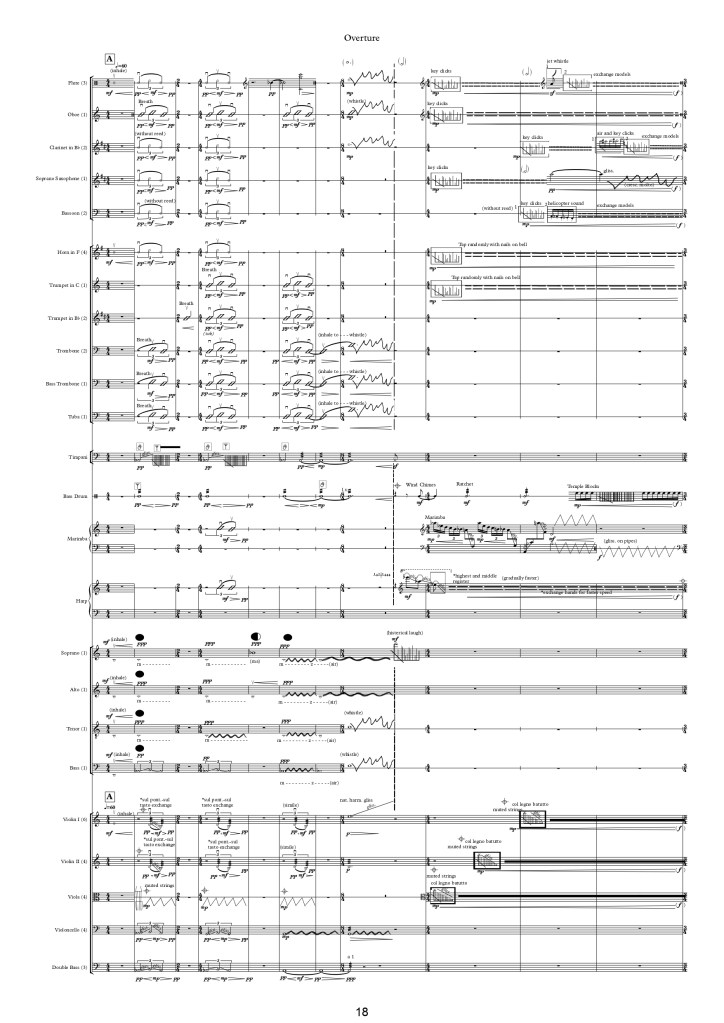
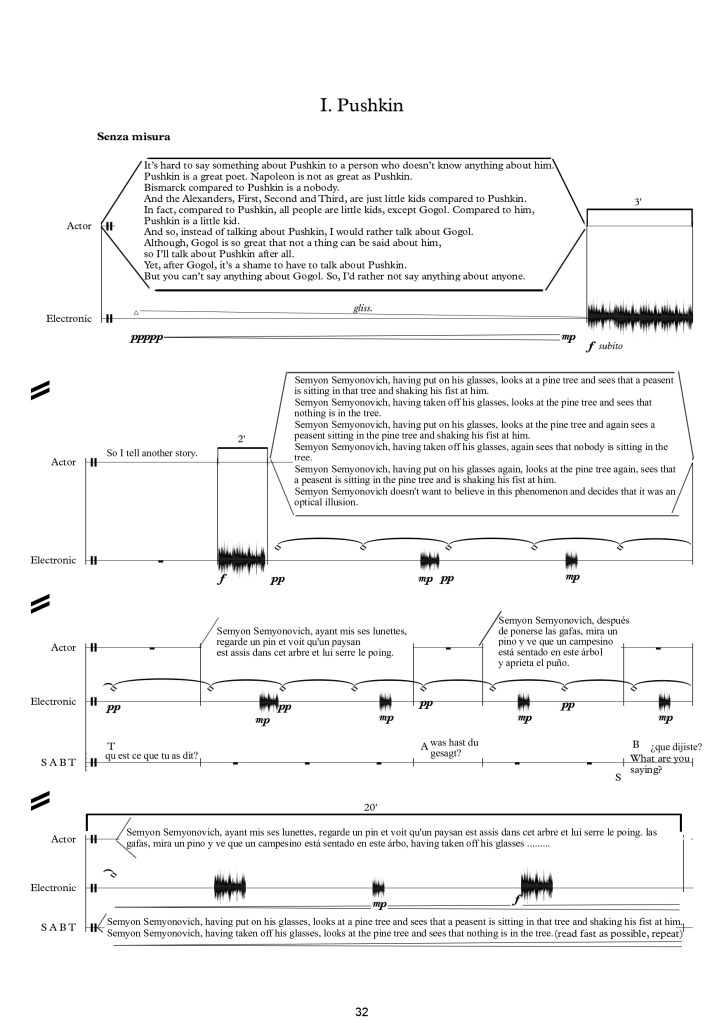
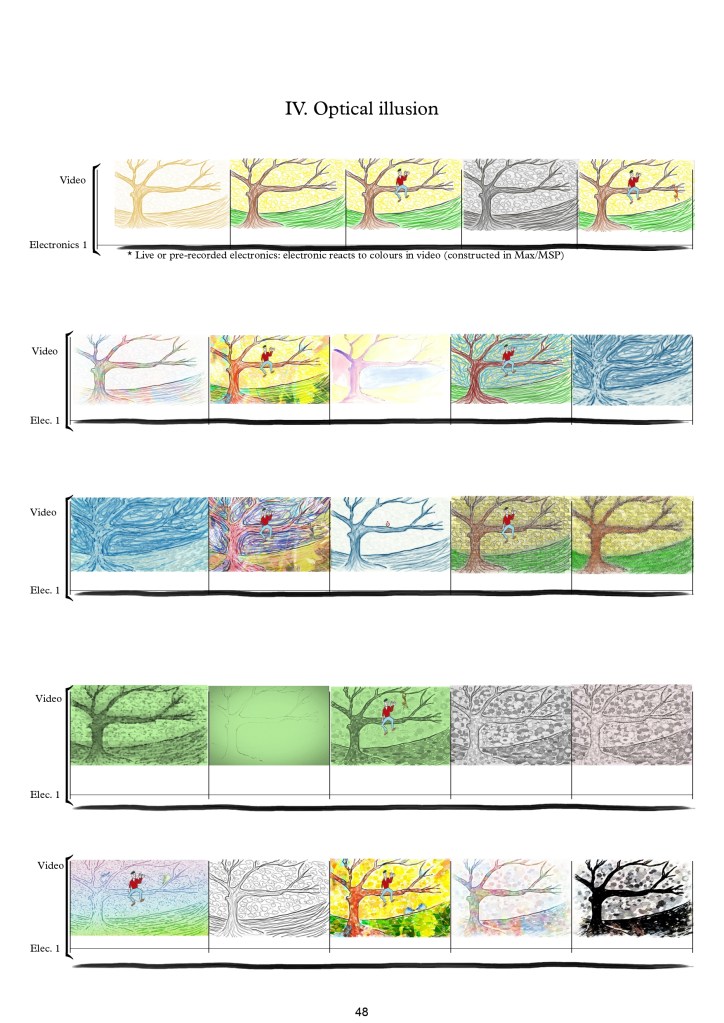
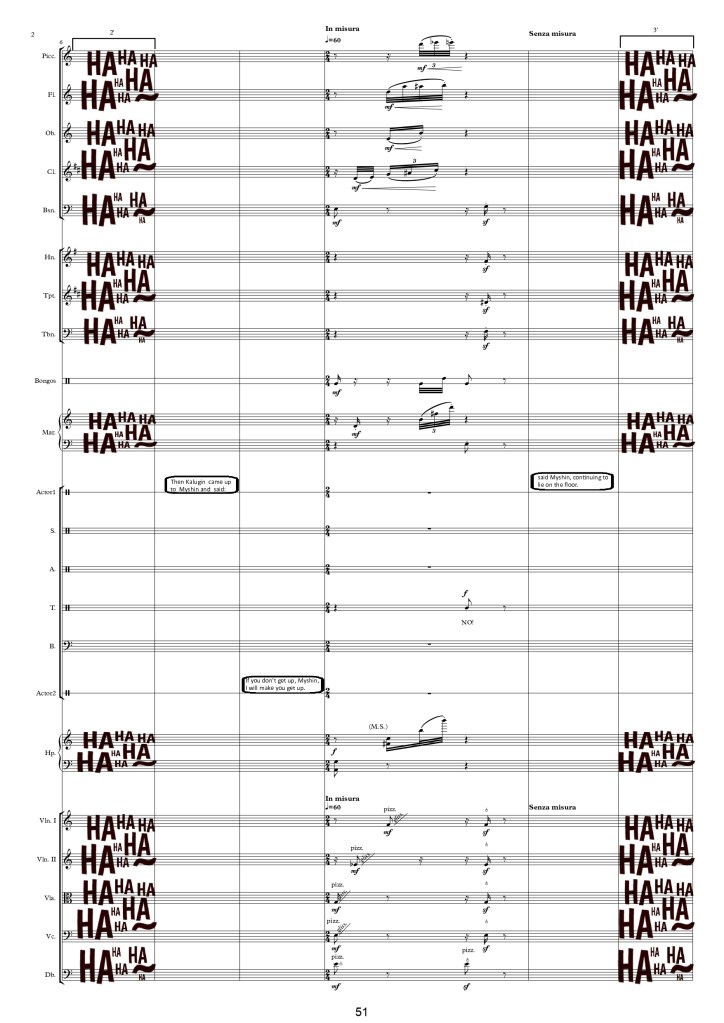
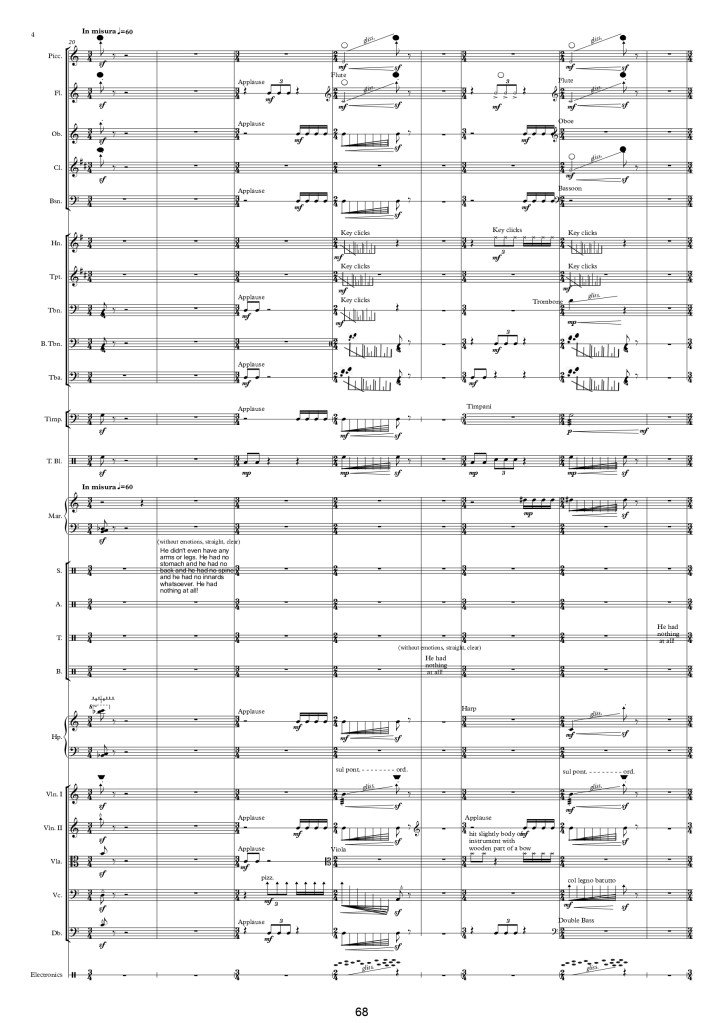
As if it really was a collection of different stories, I wanted to take the possibility to use different approaches to instrumentation in different musical numbers. In doing so, I did not want only (and always) to use singers to be the bearers of the action, I wanted sometimes to single out certain solo instruments and place them on stage as if it is a chamber work. With this, the idea was to emphasize their own individuality and actively involve the players themselves in the “action”. This piece, as well as the theoretical analysis about it, was the theses of my Master’s degree in Composition in 2020. Link for full score. Link for analysis (in Croatian).
Kýklos chordí
for Symphony orchestra (2019)
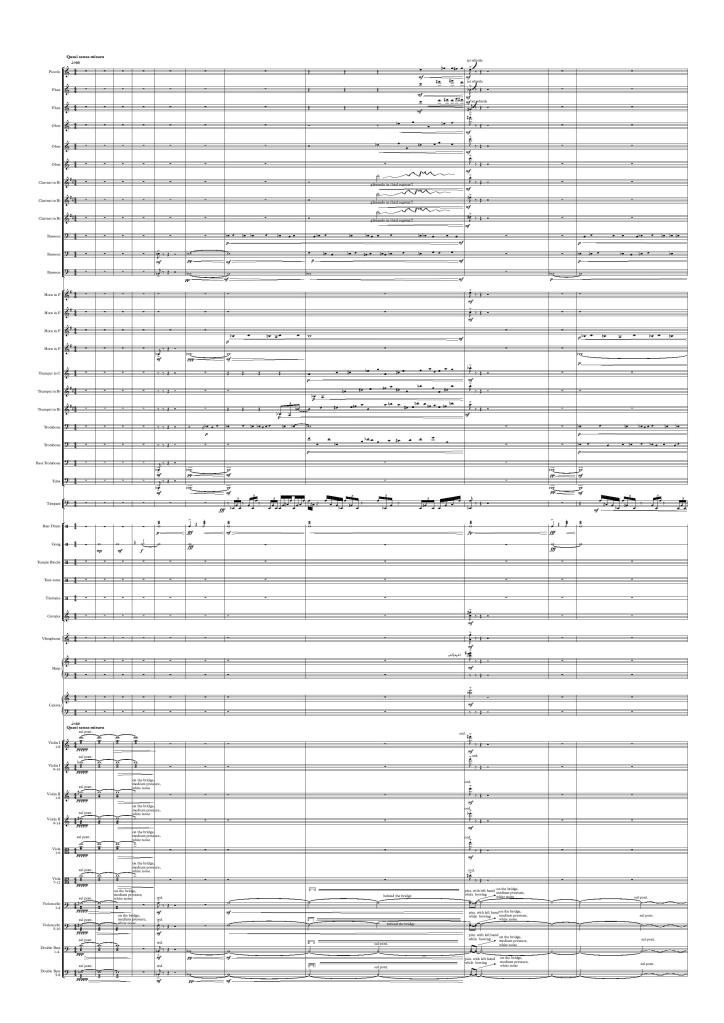
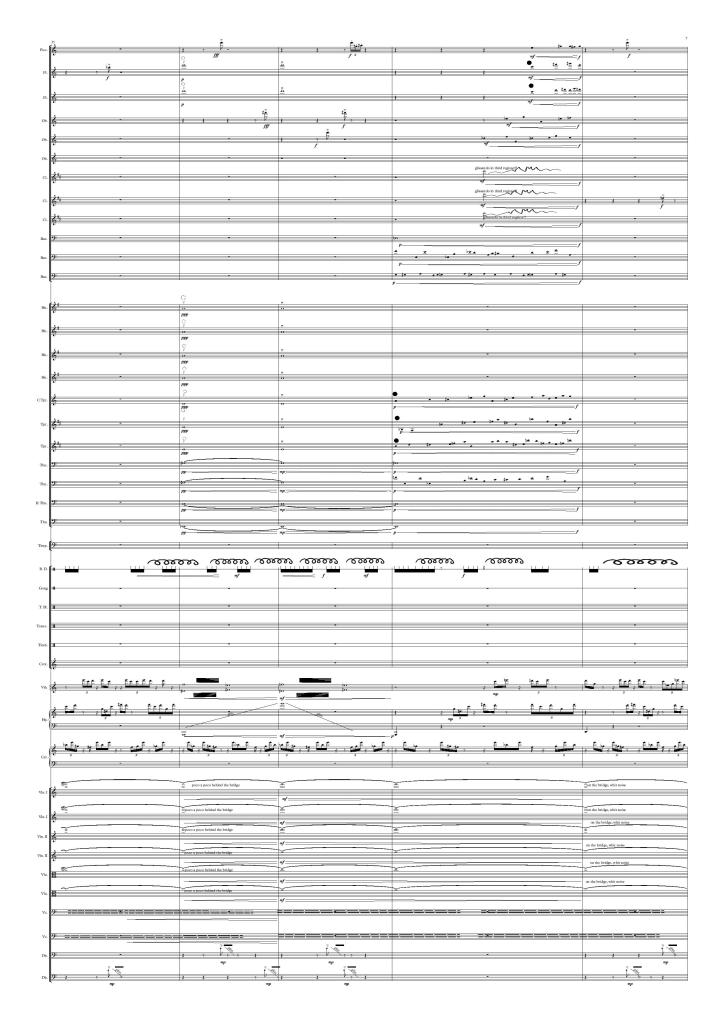
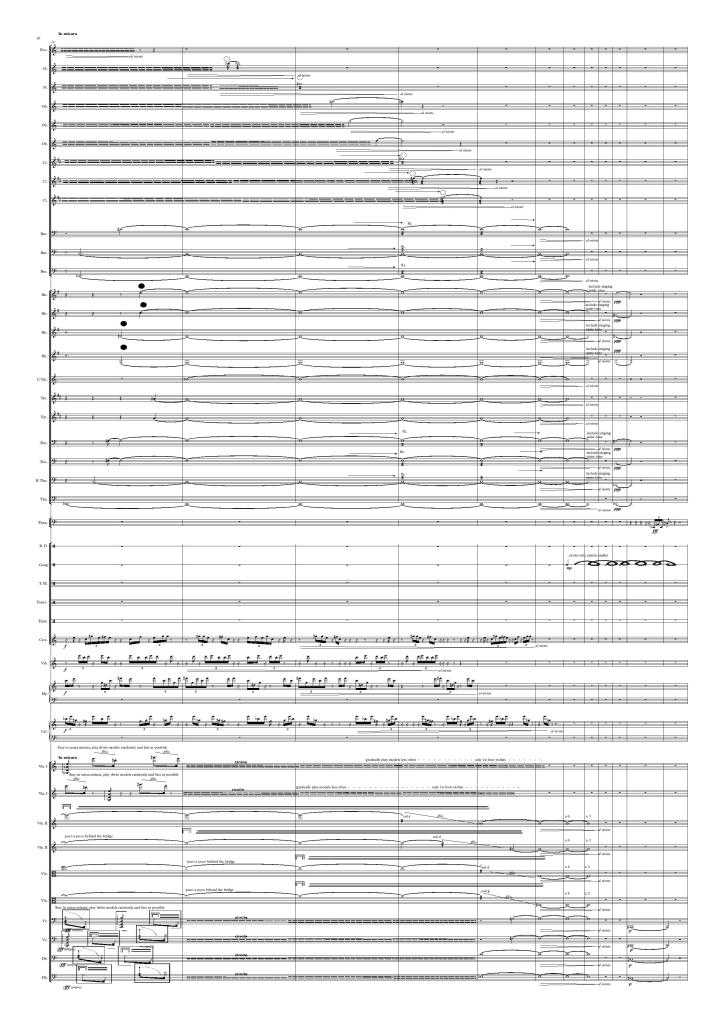
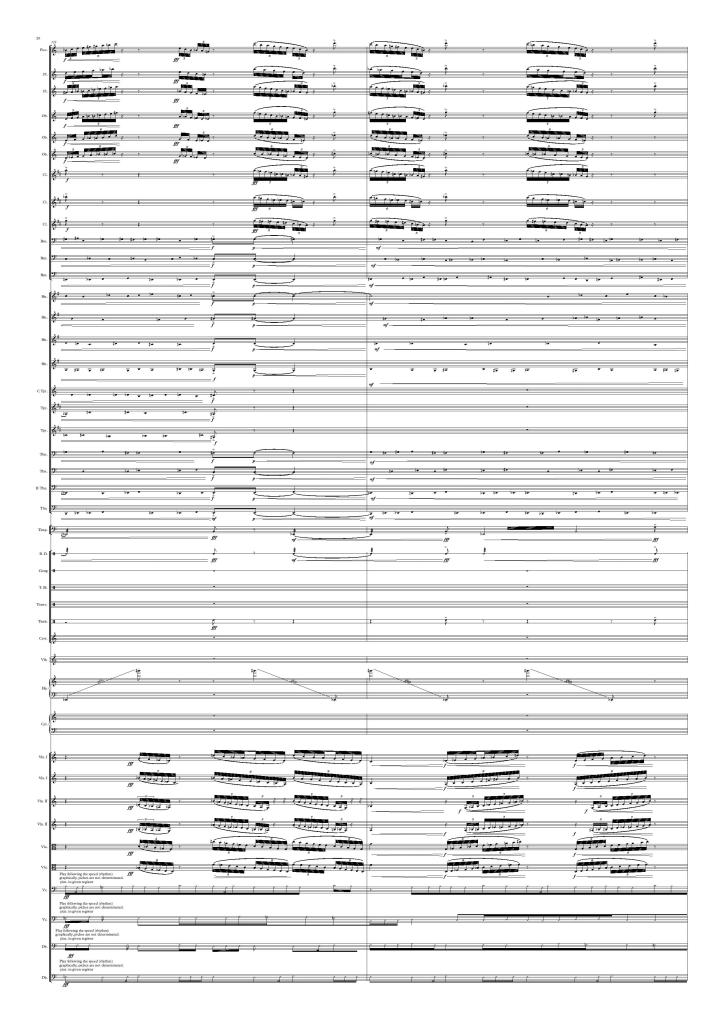
I wrote this piece while exploring spectral music analysis which I tried to apply in overall instrumentation. As a base, I chose two clarinet multiphonics, one with really soft and the other with really rough sound. Through the piece, I tried to make a smooth transition between the overall sound of both of them in a few ways: slow transition (beginning) and sudden transition (by the end of the piece). The other idea was trying not to make the sound being static and therefore every instrument’s part never has a long sustained note duration, but small glissando or, more often, circling around the main pitch of the overall orchestration chord.
The Portrait of Dora P.
for Symphony orchestra, video and electronics (2023)
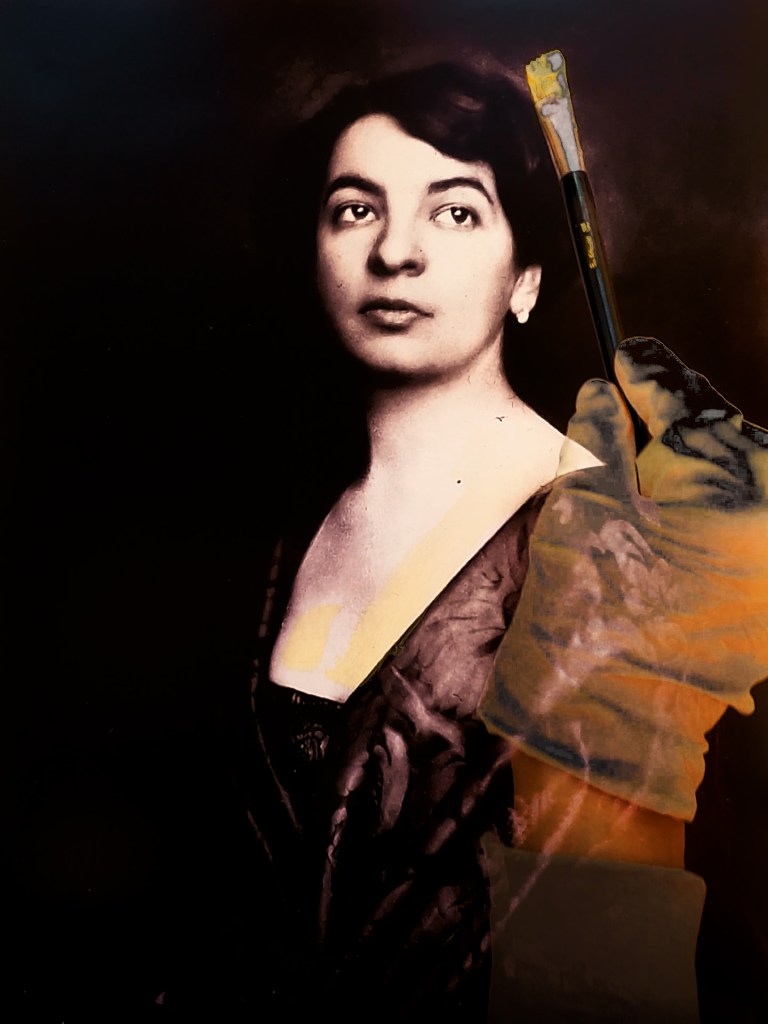
The symphony was commissioned by the Croatian radio television orchestra (HRT) and was premiered on March 4th, 2023. The entire concert was dedicated to Croatian composer Dora Pejačević on the occasion of the centenary of her death. The orchestra was conducted by the maestro Pascal Rophé. I decided to name the symphony the reverse of the way Dora Pejačević signed herself: in order to hide the fact that she was female (which would reduce her performance opportunities), she signed herselve as D. Pejačević.
Teaser video:
I decided to make the composition The Portrait of Dora P. using similar procedures as in my SoundArt works: the electronics is produced by music software where the algorithms are sensitive to visual cues (colour and movement) and react to the video itself – resulting in a specific soundscape. (see more) As sound sources for the colors, I used Dora Pejačević’s own compositions which were performed in the same concert where my composition was premiered. During the whole composition, the video shows the process of painting her portrait.
The process of composing looked like this: firstly, I made the painting, and I recorded the process of it. Secondly, In the video program, I edited the painting process to 10 minutes, which is the duration of the symphony. Then I inserted the video into the MaxMSP program and made the electronics. The electronics that I got as a result was a “base” for writing the score. Finally, I wrote the scor in a way that it corresponds to electronic parts, imitate it, complement it… At the very end, I decided that the electronics would not last the entire composition (it appears mostly at the very beginning and end of the composition), even though it is the basis of the entire musical material.